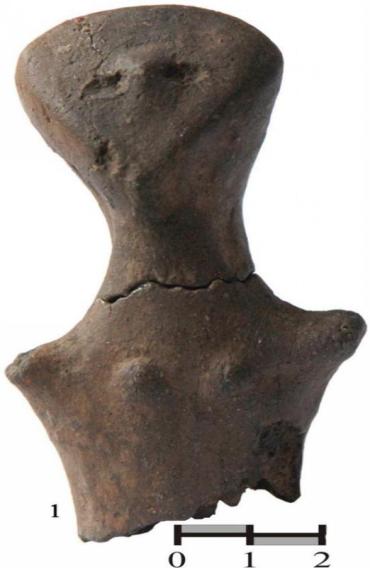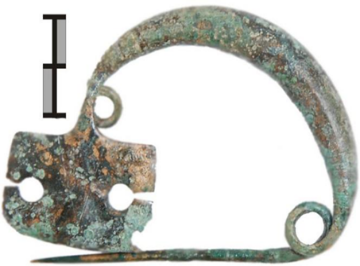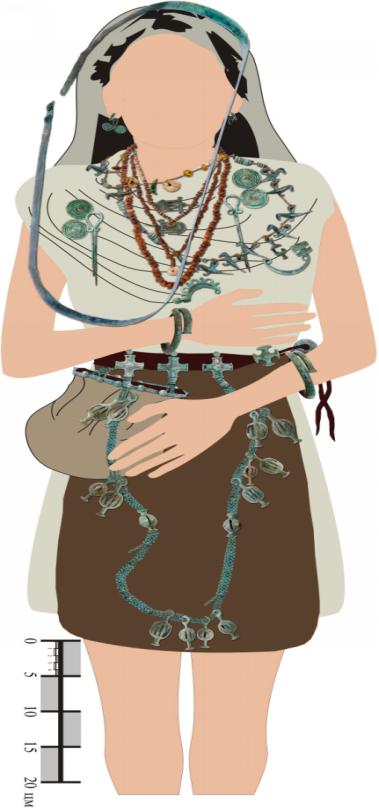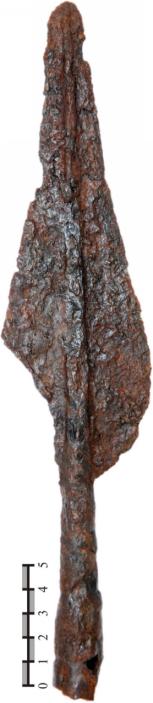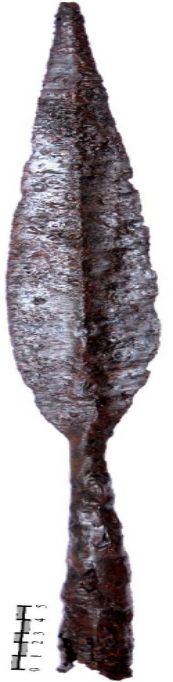
Тhe Priboj Regional Museum is the initiator and implementer of the research of mounds in Kaluđersko polje, in Jarmovаc, as part of the research project of the Archaeometallurgical Center Jarmovac. Two mounds were systematically investigated between 2004 and 2008. A part of the archaeological material from these mounds is presented as part of the permanent exhibition. The oldest mounds were created at the end of the 3rd millennium BC under the direct or indirect influence of the steppe peoples.
The largest number of excavated mounds in the Priboj area was created during the Early Bronze Age, within the Belotić – Bela Crkva group, and they belong to the Glasinac cultural circle whose bearers are considered to be the Autariats, although the mounds in the Priboj area were also built by the Celts at the end of the La Tène period. The Jarmovac area is defined as an archaeometallurgical center due to the diversity and number of sources for its study. On the basis of mining shafts, remaining tools, veins of native copper, malachite ores and chalcopyrites, basic information about this metallurgical district, the manner and technology of its exploitation are obtained. The mounds in the Priboj region are an unavoidable and most often the only source for the study of cultural affiliation, ethnogenesis, social organization, funeral rituals, migrations to the study of weapons, jewelry, physical appearance, nutrition, diseases and many other aspects of the life of people of Metal-Age prehistoric communities. The Archaeo-metallurgical Center Jarmovac is one of the four oldest in the Balkans. The centre was first introduced into the literature by O. Davies of Belfast in 1937, registering two shafts in the area. He was part of the research within the international project “Origin and Development of Metallurgy in Euro Asia” of the University College of London in cooperation with museums from Munich, Belgrade, Prokuplje and Priboj.
A general and common observation can be made for both excavated mounds: they were erected in an area where there was no Eneolithic mining settlement before; They were created during the Early Bronze Age; they are made of earth and stone – mostly river pebbles; built during the Early Iron Age; They belong to the group of mounds of larger dimensions (twenty in diameter and over three and a half meters high). Both mounds are bordered on the periphery by a circular stone wreath of larger pebbles. Thirty-nine graves were discovered in both mounds. Four of the primary ones are Early Bronze Age graves, and all the others belong to different phases of the Early Iron Age. Finds (weapons and jewelry) found in seven graves from mound 2 and 11 mortuary ceramic vessels, two of which belong to mound 1, were selected for the exhibition.