The Monastery of St. Nikolas
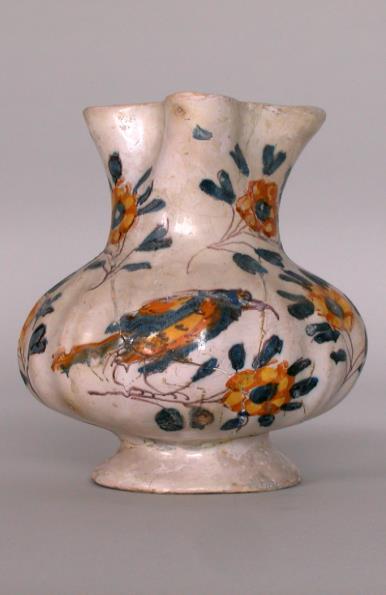
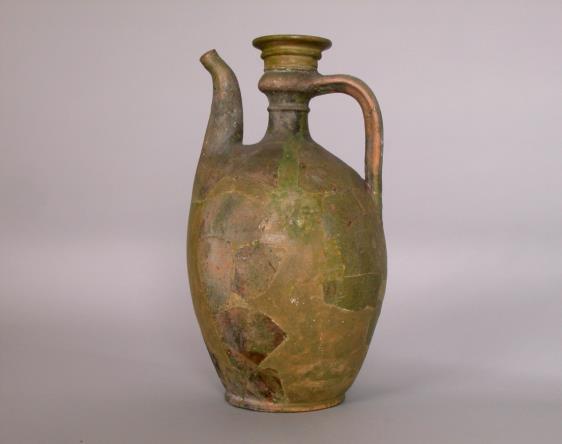
Within this collection, exhibits from two sites of great importance in the territory of the Priboj municipality are exhibited. A part of the archaeological finds from the monastery of St. Nicholas in Banja and the monastery of St. George in Mažić was presented. The findings are the result of many years of excavations carried out in Banja by the Republic Institute for the Protection of Monuments from Belgrade and are still in progress. The bearer of the research in Mažić was the Priboj Homeland Museum. The currently exhibited objects testify to a part of the archaeological treasure of Srednje Polimlje with the aim of getting acquainted with the wealth and past of this area, in addition to the professional public, and our visitors. Banja was known in the middle of the 12th century to the Arab geographer Muhammad as Sarif al-Idrisi, who gave its first written mention. After Idrisi, more than half a century later, writing the Studenica Typikon (1207-1215), St. Sava decided that in the future, in the election of the abbot of the Studenica Lavra, as one of the six most prominent deans of Serbian monasteries, the abbot of St. Nicholas would participate in the election of the abbot of the Studenica Lavra. Nicholas in Dabar, which is the first mention of this monastery in old Serbian sources. In the monastery port, the central part of the complex is dominated by the church of St. Nicholas. On the north side is the church of St. Elijah and on the south side of the Assumption of the Virgin, and northwest of the position of the church of St. Nicholas. Elijah are the remains of a monastery tower.
The entire complex is located on an elevated plateau above the Lim valley sheltered by the cliffs of Banjsko Brdo. At the foot there are powerful springs of warm healing waters that formed a terraced elevation from the sediments of dripstone on which the monastery was built. To the north of the monastery, along the Jarmovac stream, there are a large number of remains of mining pits. To the east of the monastery on the southern slopes of Banjsko brdo there are the remains of medieval mining pits, popularly known as Greek wells.
The monastery was destroyed and rebuilt several times. The first known restoration is from 1328/29 and the four of these restorations were King Stefan of Dečani and his son Dušan. The following period in the history of Banja is quite dark, in which a certain amount of light is brought by a large number of tombstones of members of the family of the district lords of Vojinović, who were buried inside the monastery of Banja. On the northern slopes below the hill and the fortress of Oštrik, the remains of a fortified city were discovered, which stretched over 20 hectares.
During the Ottoman conquest of this area at the end of the 15th century, the monastery of St. Nicholas was greatly damaged. Nicholas in the Banja. Therefore, second great renovation of the monastery was undertaken by Patriarch Makarije Sokolović in the seventh decade of the 16th century,elevating it once again to the level of one of the most important monasteries of the Serbian Church. In the 18th century, there was a cruel Ottoman reprisal and the greatest destruction of monastic temples and buildings after the Austro-Turkish war, in which the Serbs were on the side of the Austrian army. A period of complete abandonment of the monastery of St. Nicholas until 1852 when it was restored. After the 1875 uprising, in which the monastic brotherhood played a leading role, the Otttoman army burned down the monastery and the village in Banja, and the church of St. Nicholas was destroyed. Temple of St.Nicholas turned it into a military warehouse and placed its crew in the port. The last restoration took place between 1899 and 1901 during the reign of Archimandrite Gideon Marić and was solemnly consecrated in 1902 on the feast of St.Elijah.
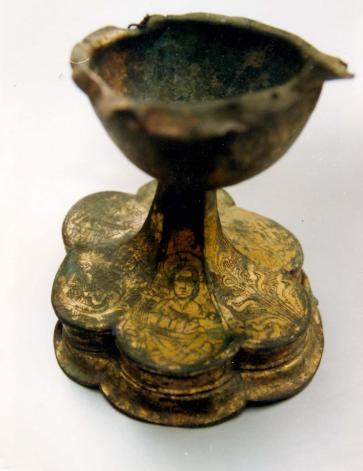
After excavations in 1974, the monastery treasury was found buried in front of the altar partition of the southern church, dedicated to the Assumption of the Virgin, at the end of the 17th century.


The Monastery of St. Georgia in Mazić
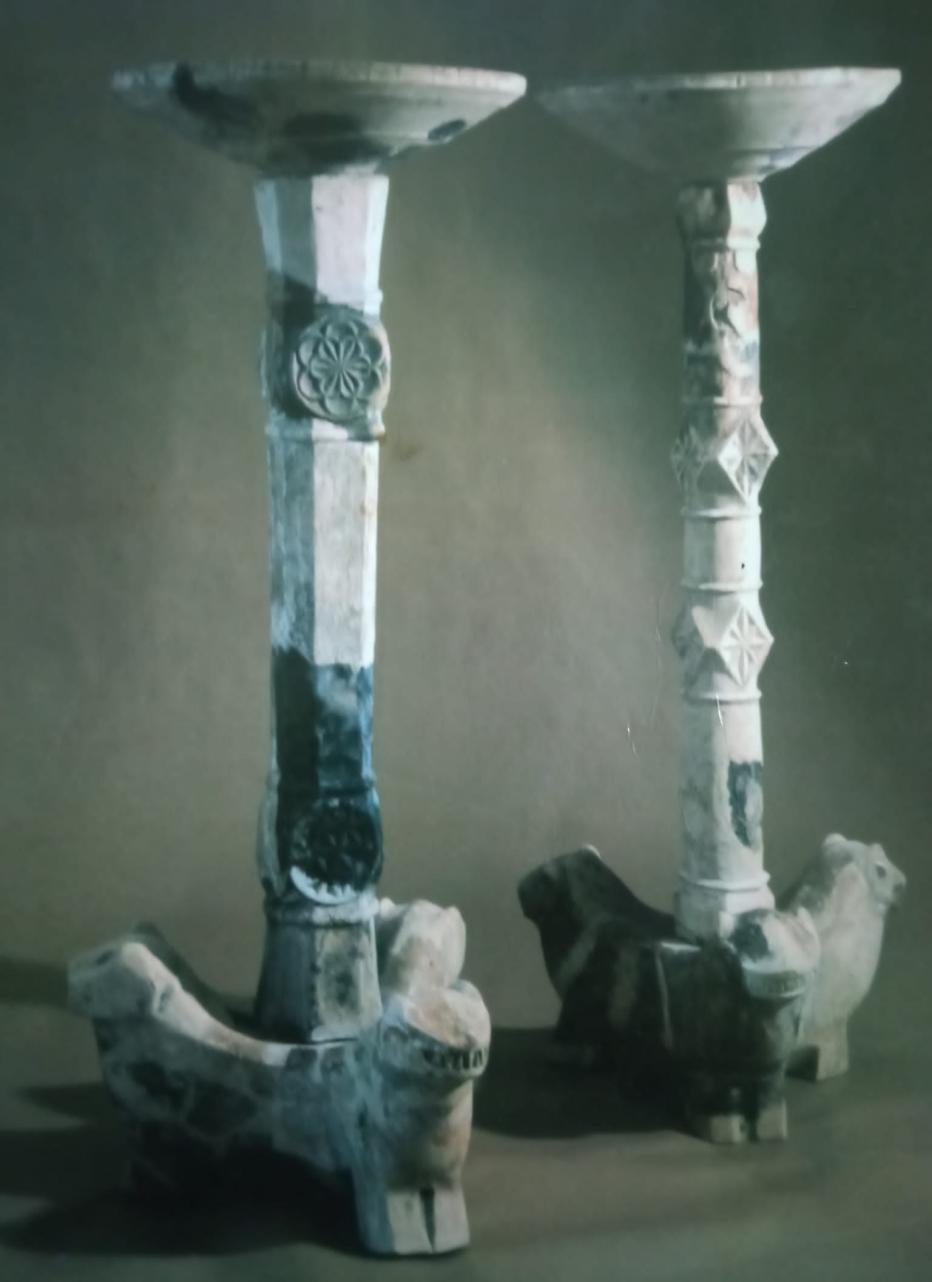
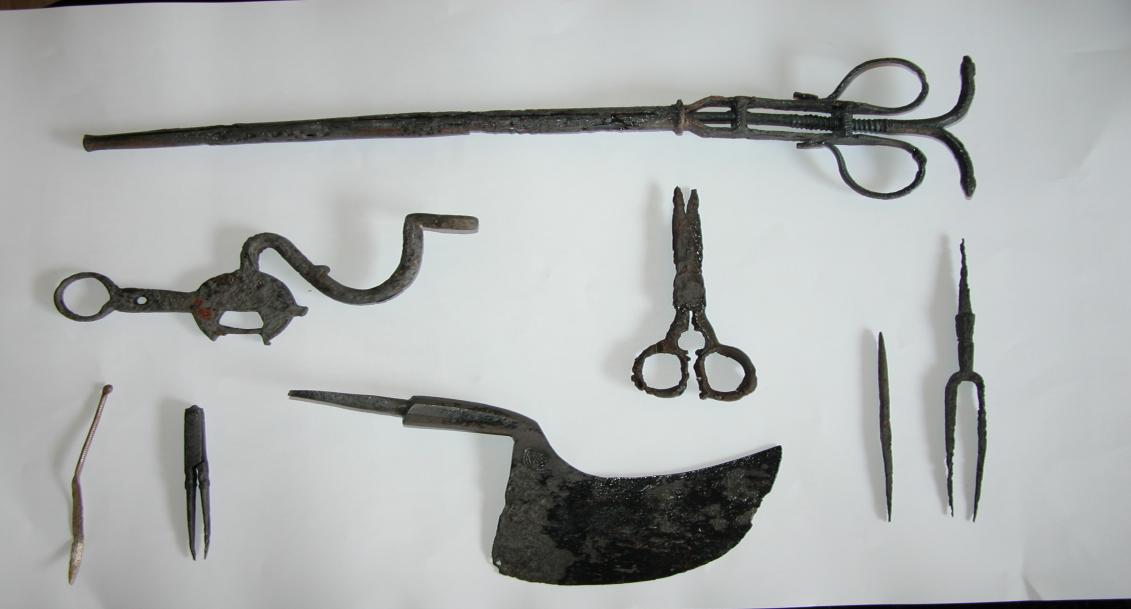
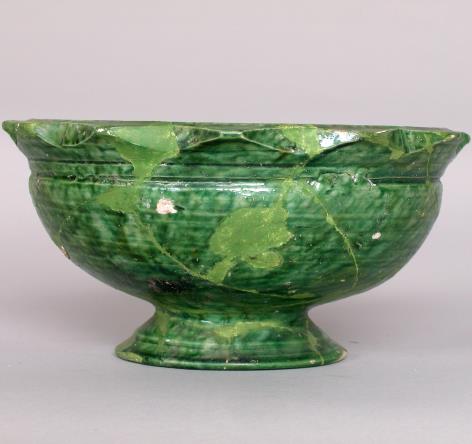
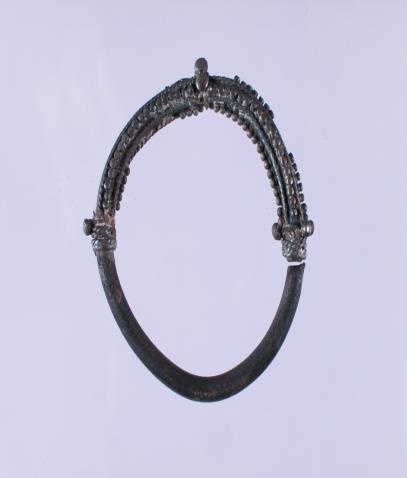
It is considered one of the pearls in the string of medieval monasteries of Polimlja, located in the former Orahovica, and today the village of Mažići near Priboj on the Lim. The exact time of its creation is not known, but it is mentioned in the Studenica Typikon (13th century) as one of the seats of the Diocese of Dabar. After the last destruction during the 18th century, destroyed and overgrown with bushes over time, it waited for about 260 years to come back to life. Recognizing the importance of the monastery through centuries of history and the need to restore, explore and revive it, the Priboj Homeland Museum launched a project in 1998 that was implemented over the next three years. After the completion of the excavations, the four-millennial cult of the place where the monastery was built was proved – around the monastery itself and in the surroundings of about five kilometers, 20 prehistoric mounds (tombs) were registered, which are dated to the transition from the Eneolithic to the early Bronze Age. A lot of reliable evidence was found in the four excavated mounds: numerous fragments of pottery as well as mostly preserved pithos and parts of an urn, specimens of jewelry: needles, fibulae, bracelets. The mounds show that the area of today’s Mažić was inhabited by steppe peoples around 1900 BC. Georgia, hospital, dormitory, building where the kitchen is located, hiding place, pantry and basement, part of the south wall. From the movable archaeological material, two candlesticks made of Studenica marble and the finds of medical instruments (surgical knife and compass, fork for amputation, glasses) stand out. A late antique tombstone was also found, as well as several medieval (12th century) tombstones. There is also a large number of metal objects that had a liturgical purpose or in everyday monastic life.