The town of Jagat is one of the 9 medieval towns in the Lim Valley and was built to control the road through that valley, but also to provide direct protection to the nearby Banja Monastery, which, like the neighboring monastery Mažići, dates back to the pre-Nemanjić or early Nemanjić period. On the bank of the river, at the foot of the fortress, there was a medieval square around which today’s Priboj was created. The fortress has a triangular base, the remains of the walls are 2.5 meters high, and the collapsed defensive towers are clearly recognizable. In the upper town, which is a specificity, the fortress had a well of drinking spring water and could resist sieges for a long time.
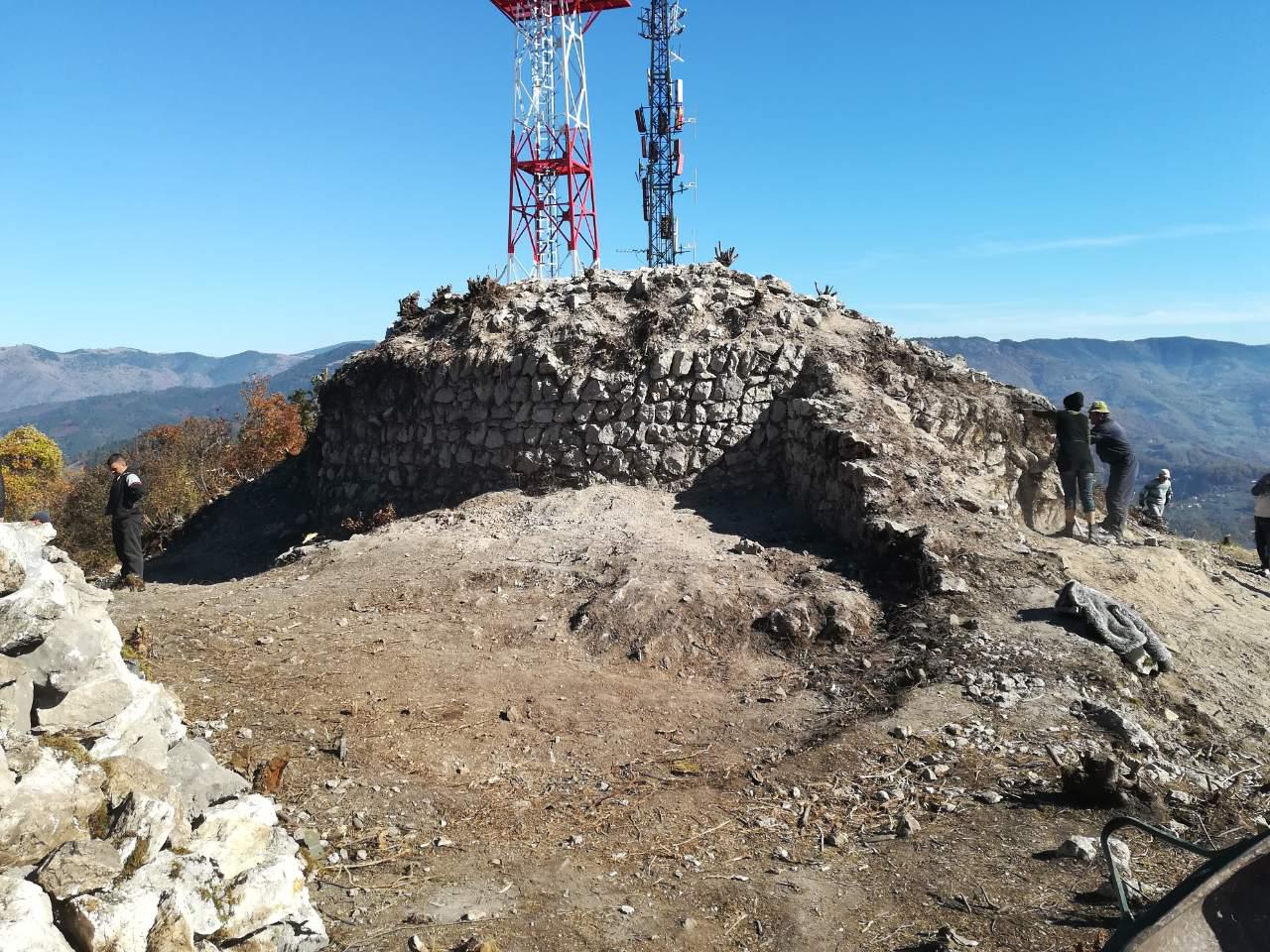
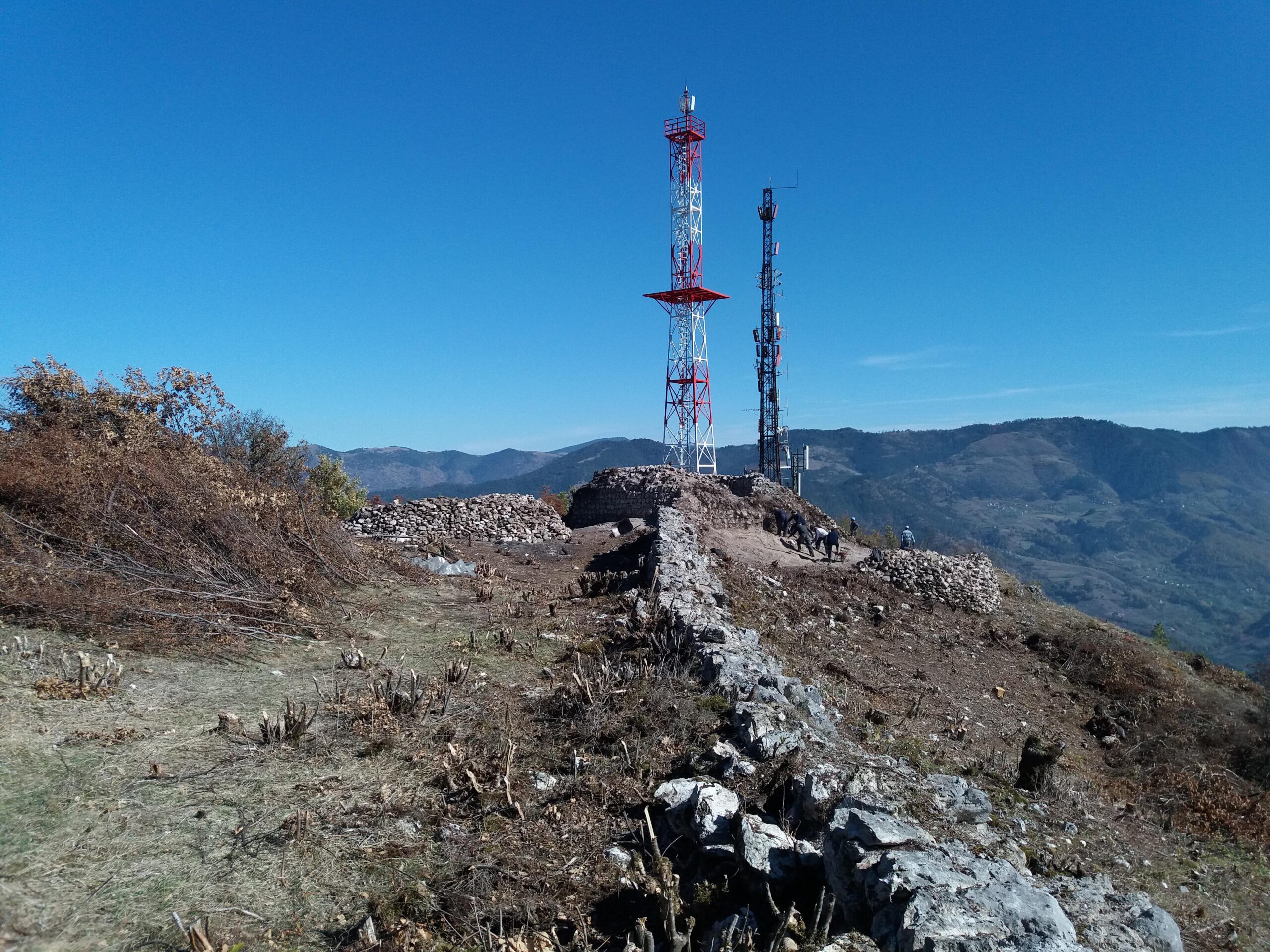
Today, the fort is largely destroyed. A wall 90 meters long, 1.2 meters thick and 1.5 to 3.5 meters high is clearly visible, which is broken in the middle, and the stone from it is printed to the foot of the mountain where the fortress is located. There are clearly visible remains of the foundation from the towers. At the remains of the foundations of the round donjon tower, there are stone-shaped stairs that descended to the lower level of the city. Today, the entire site is overgrown with trees and shrubs, so any research at the site itself is impossible due to the condition of the site. A few years ago, cleaning and research in this place was carried out by members of the Homeland Museum from Priboj.
The remains of the Jagat Fortress belong to the municipality of Priboj and represent an immovable cultural property. The Institute for the Protection of Cultural Monuments from Kraljevo protected this site in 1982. The site of Jagat has never been seriously excavated and explored archaeologically. The Priboj Homeland Museum, headed by former director Savo Derikonjic, began excavating the fortress in September 2017. The entire project of research of the fortress was financed by the Municipality of Priboj.